
Sinus Surgery
Image-Guided Endoscopic Sinus Surgery
Functional endoscopic sinus surgery (FESS) is performed entirely through the nostrils with an endoscope, using image guidance based on your CT scan. It is designed to open blocked sinus drainage pathways and remove diseased tissue for patients whose sinus symptoms persist despite appropriate medical treatment.
Performed by Dr. Price Sonkarley, board-certified otolaryngologist.
Who It May Help
When Sinus Surgery May Be Discussed
Surgery is generally considered only after appropriate medical therapy has been tried. Your physician will determine whether it may be appropriate for you.
Recurring Sinus Infections
Sinus infections that keep returning or never fully clear despite treatment.
Chronic Sinus Pressure
Ongoing facial pressure, pain or headache related to sinus inflammation.
Persistent Blockage
Nasal obstruction, sometimes with nasal polyps narrowing the sinus pathways.
Post-Nasal Drainage
Thick drainage, reduced sense of smell and chronic throat clearing.
Understanding the Procedure
What Image Guidance Means
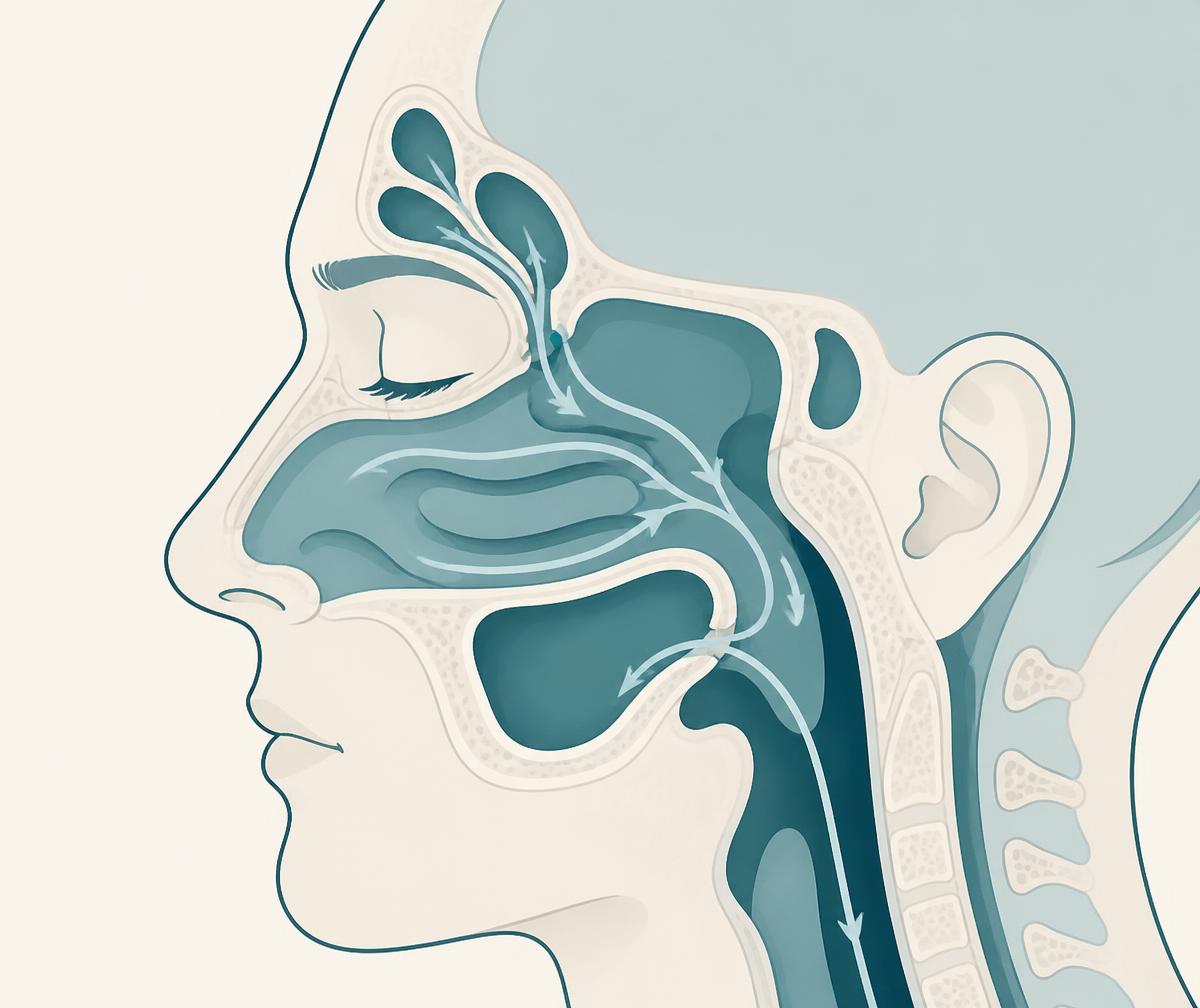
The sinuses are air-filled spaces that drain into the nose through narrow pathways. When those pathways stay blocked, mucus builds up and inflammation continues.
During endoscopic sinus surgery, an endoscope is passed through the nostril so the sinuses can be seen and treated without any external incision. Blocked drainage pathways are opened and diseased tissue or polyps are removed.
Image guidance uses your CT scan to display instrument position relative to your own anatomy in real time. It is a navigation aid used to support careful, precise surgery near the eye and skull base.
The goal is functional: to restore normal sinus drainage and allow the lining to heal, so that ongoing medical therapy works better.
The Procedure
How the Surgery Works
Sinus surgery is typically performed as an outpatient procedure under general anesthesia. The specific sinuses addressed depend on your CT imaging and examination findings.
A septoplasty or turbinate reduction is sometimes performed at the same time when nasal anatomy is contributing to obstruction.
If nasal splints are needed, they are usually removed 3–5 days after surgery. Your first sinus debridement — removal of dried blood and mucus with an endoscope — is generally performed about three weeks after surgery.
How Treatment Generally Works
Evaluation & CT Imaging
Examination, nasal endoscopy and CT imaging are used to map your sinus anatomy and determine whether surgery may be appropriate.
Surgical Planning
Your CT scan is loaded into the image-guidance system, and the sinuses to be addressed are planned in advance.
Endoscopic Surgery
Working through the nostrils with an endoscope and navigation, blocked drainage pathways are opened and diseased tissue is removed. No external incision is used.
Healing & Debridement
Saline irrigation begins as directed, splints (if used) come out at 3–5 days, and the first debridement visit is about three weeks after surgery.
Patient Education
How Endoscopic Sinus Surgery Works
This third-party animation gives a general overview of functional endoscopic sinus surgery (FESS). It is general education, does not necessarily show the specific instruments or navigation platform used in your care, and is not a substitute for your physician's advice.
General educational animation. Technique and equipment may vary; Dr. Sonkarley will discuss what may be appropriate for you.
Functional Endoscopic Sinus Surgery (FESS) Animation
Third-party patient education animation
Manufacturer educational content is provided for general information. Treatment recommendations should be discussed with your physician.
What to Expect
Healing Timeline
The majority of healing in your nose takes place over 4–6 weeks. In patients with nasal polyps and severe mucosal hyperreactivity (over-reactive nasal and sinus lining), the process can take longer. During this time, keep your nose out of dusty or smoky environments, including tobacco smoke.
Irrigation & Medications
Crusting of blood and mucus can slow healing. Use saline nasal irrigation — for example NeilMed® Sinus Rinse — two to three times a day for at least one month after surgery, irrigating as forcefully as you comfortably can. Saline spray can be used between irrigations. You may receive prescriptions for pain medicine, antibiotic ointment, antibiotics and in some cases steroid pills; taking them properly helps prevent post-operative infection and scarring.
Bleeding, Nausea & Pain
Oozing from the nose is common for 3–5 days and for 12–24 hours after each post-operative visit; sleeping with your head elevated helps. Discharge may turn maroon or dark brown from old blood — this is normal and does not mean infection. For persistent bleeding, sit upright and breathe through your nose for 5–10 minutes; if it is heavy or does not stop, contact the office. Nausea after anesthesia usually fades in 12–24 hours. Use prescribed pain medicine as needed, then switch to acetaminophen (Tylenol®); avoid aspirin and ibuprofen-type anti-inflammatory medications for the first two to three weeks as these may promote bleeding.
Activity, Work & Travel
Most individuals return to work within a week. You may sniff to clear your nose, but do not blow your nose until 3 days after surgery. Avoid bending your head below your waist, lifting anything over 10 pounds (including children) and straining for one full week. We prefer you stay in the local area overnight after surgery; if necessary, you may travel by air 48 hours after surgery.
Follow the individualized medication and preparation instructions provided by ENTCare SWFL and your prescribing physician. Individual experiences vary.
Frequently Asked Questions
Explore Other Treatment Options
Nasal Valve Collapse Treatment
Featuring LATERA®
For difficulty breathing through the nose associated with nasal valve collapse.
Chronic Rhinitis Treatment
Featuring RhinAer® & ClariFix®
For persistent runny nose, congestion and post-nasal drip.
Sinus Problems That Won't Go Away?
Request an appointment with Dr. Price Sonkarley to discuss whether sinus surgery may be appropriate for you.